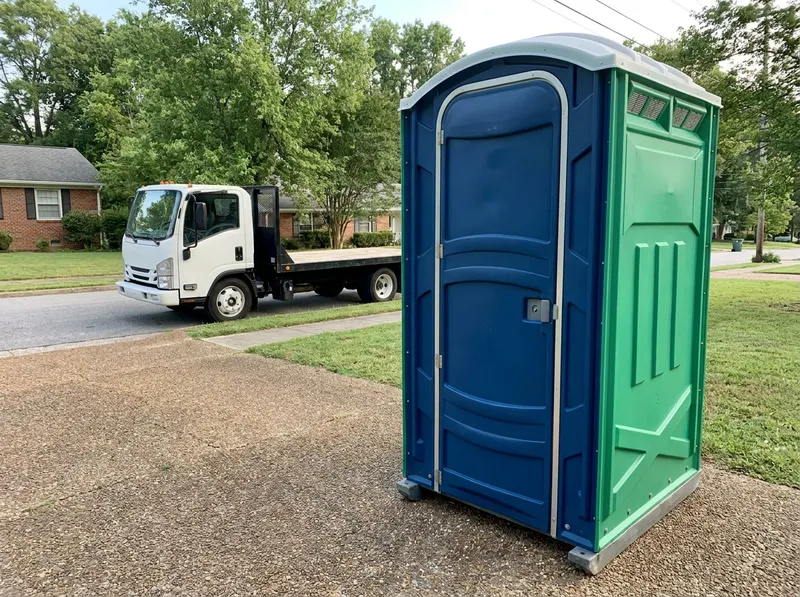
A monthly rental is a lease, not a purchase: Meadowloo Portable Toilets owns, services, and hauls the unit, while you keep it on site for the length of the project. That is the key distinction from a single-day event…
A monthly rental is a lease, not a purchase: Meadowloo Portable Toilets owns, services, and hauls the unit, while you keep it on site for the length of the project. That is the key distinction from a single-day event rental, a weekend event unit comes and goes within 48 hours, while a monthly unit stays put through a framing-to-finish build and gets a recurring service visit. For a construction manager on a multi-week job in Lookout Valley, Ooltewah, or a Southside infill lot, the monthly rate is lower per day than booking day-by-day and removes the risk of a unit sitting unserviced. The standard weekly visit is once every seven days; crews over roughly 10 workers, or sites with a toilet logging heavy daily use, usually add a second weekly service so the tank never fills between visits. Under OSHA 1926.51 a construction site must supply one toilet for up to 20 workers, so a single monthly unit covers a small-to-mid crew; the Portable Sanitation Association International publishes the service-frequency guidance our weekly schedule follows.
Step 1: call (423) 407-5331 and give the delivery address, the unit type, and your start date. Step 2: a truck drops the unit on firm, level ground, a gravel pad, a driveway edge, or a spot a service truck can reach within about 15 feet. Step 3: the same day and date each week, a technician pumps the tank, scrubs the interior, and restocks paper and sanitizer. Step 4: when the job wraps, you call to end the lease and the unit is hauled away, typically within one to two business days. Billing runs in 28-to-30-day cycles from the delivery date, so a two-month job is two cycles, not a prorated tangle.
Unit choice follows the site. A standard flushless unit fits a tight renovation driveway in North Chattanooga, Highland Park, or St. Elmo where space is scarce. A deluxe flushing unit with a sink suits a long office-park or dam-area contract where crews want hand-washing on site, which also supports the CDC hand-hygiene guidance for food-handling and medical-support work. An ADA-compliant wheelchair-accessible unit is required when a public or government site must meet accessibility rules; those units are wider and need a flatter placement spot. A hand-wash station or holding tank can be added to any monthly order. If a unit will see freezing nights on Lookout Mountain or in Red Bank through winter, deodorizer and tank additives are adjusted so the system keeps working in the cold, a detail the EPA's septic and wastewater program" guidance reflects for cold-weather holding tanks.
Placement matters for the monthly cost staying flat. A unit set where the service truck cannot reach it triggers a relocation, so a spot near the street edge in Brainerd or East Ridge, clear of parked cars and locked gates, keeps the weekly visit quick. Streets in historic districts sometimes need a right-of-way or encroachment permit from the City of Chattanooga before a unit sits on a public verge; the city's municipal permit office handles those, and property owners place units on private ground without one. For event-length needs under a week, a short-term rental is the better fit; the monthly plan is built for projects measured in weeks and months, not days.
Every job gets a firm, written price after an on-site visit.
Tell us about your long-term monthly toilet rental job in Chattanooga and we'll send a clear, written quote, usually the same day.
 Meadowloo Portable Toilets